I'm Clément Longeac. I build DEMNE, a routing framework that picks, per entity type, the lightest method that stays reliable — rules, a transformer, or an LLM. On an unseen AP-HP cohort it routes 99.5% of mentions to auditable rules at F1 0.941, where a fine-tuned transformer reaches 0.358.
I'm a fifth-year student at ESIEE Paris, specializing in Data Science & AI, and enrolled in the school's Tremplin Recherche track — a program built for students heading toward doctoral research rather than a standard industry placement.
My work centers on making unstructured clinical text usable for research: extracting the biomarkers, staging information, and treatment details buried in French oncology reports, where general-purpose NLP tools consistently fail on domain vocabulary and document structure.
Alongside my studies I tutor mathematics and physics-chemistry through Complétude, and I'm preparing applications for a CIFRE industrial PhD in biomedical AI at Sorbonne University.

A hybrid named-entity recognition pipeline for French oncology clinical text.
of mentions routed to rules on an unseen AP-HP cohort (411/413)
rule F1 vs 0.358 for a fine-tuned DrBERT, same entities
leave-one-corpus-out routing concordance
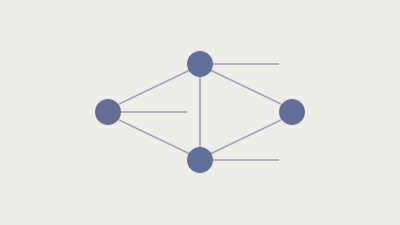
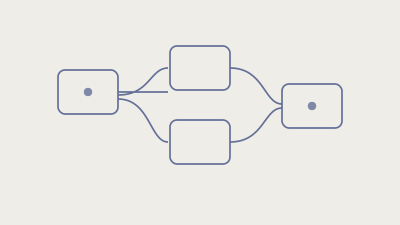
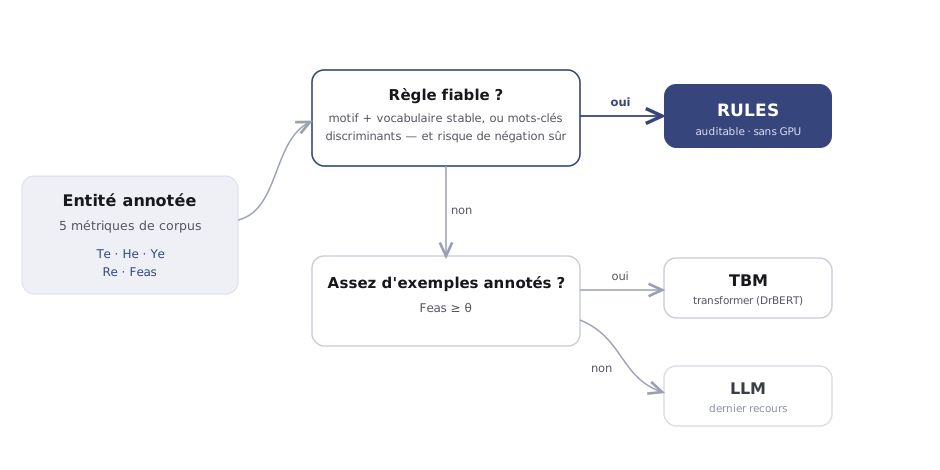
Off-the-shelf NER models struggle badly on French clinical text: dense abbreviations, inconsistent formatting across hospital systems, and biomarker terminology that barely appears in general training data. DEMNE tackles this with a staged pipeline rather than a single model — each stage handles what it's actually good at, and only escalates to a heavier model when it has to.
The system is fine-tuned on DrBERT-7GB across three distinct French oncology corpora, and targets seven priority biomarker entity types used in treatment-relevant reporting.
Regex and lexicon matching catch high-confidence, low-ambiguity entities cheaply — dates, dosages, standard biomarker abbreviations.
DrBERT-7BG, fine-tuned across three oncology corpora, handles the entities that need real semantic and domain understanding.
Remaining conflicts and edge cases are routed to an LLM pass for final disambiguation before output.
Clinical entity extraction over patient records sits squarely inside the EU AI Act's high-risk category. DEMNE's staged design keeps Articles 12 and 14 in mind from the start, not bolted on after the fact.
Every extraction decision is traceable to the stage (rules, transformer, or LLM) and confidence score that produced it, enabling automatic audit logging.
LLM arbitration outputs are flagged for clinician review rather than silently accepted, keeping a human in the loop on ambiguous cases.
Applied and validated the DEMNE routing approach on hospital data: extracting oncology biomarkers (ER, PR, HER2, Ki67, FISH) from French clinical reports, and defining an auditable, deployment-realistic clinical path.
Designed DEMNE, a hybrid clinical NER pipeline (rules / transformer / LLM) for French oncology text, driven by five formalized corpus metrics — the core project of the Tremplin Recherche track ahead of PhD applications.
Building a platform that gives brain-injury patients and occupational therapists a structured way to compare cognitive-compensation tools. Started as a Python/Streamlit prototype at the SN@SU hackathon (Sorbonne Université, with Flor Sanchez-Luizard, occupational therapist at UEROS L'ADAPT Île-de-France); now scoping a production rebuild (FastAPI, PostgreSQL, Next.js) with HDS/RGPD-compliant hosting and a semantic search engine for clinical tool matching.
Fifth-year student in ESIEE Paris's five-year engineering program, specializing in Data Science & AI (DSIA).
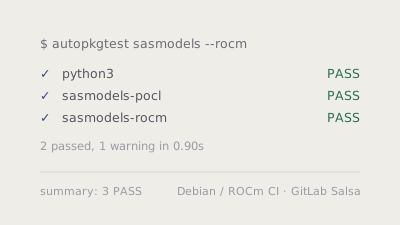
Developed autopkgtests using OpenCL for AMD GPU compatibility (pyopencl, nabu, ufo-filters, pyvkfft) across Debian/ROCm infrastructure on GitLab Salsa.
Teaching mathematics and physics-chemistry to about ten students, from primary school through terminale, alongside my engineering studies.
The written record of the DEMNE work, as it moves toward submission.
Manuscript detailing the DEMNE cascade framework, the five corpus-characterization metrics used for paradigm selection, and the grid-search calibration results across three French oncology corpora.
Beyond DEMNE — tools built end to end, from a hackathon to data and infrastructure work. Click a project for details.

A catalog of digital cognitive-compensation tools for people with brain injuries and their occupational therapists.

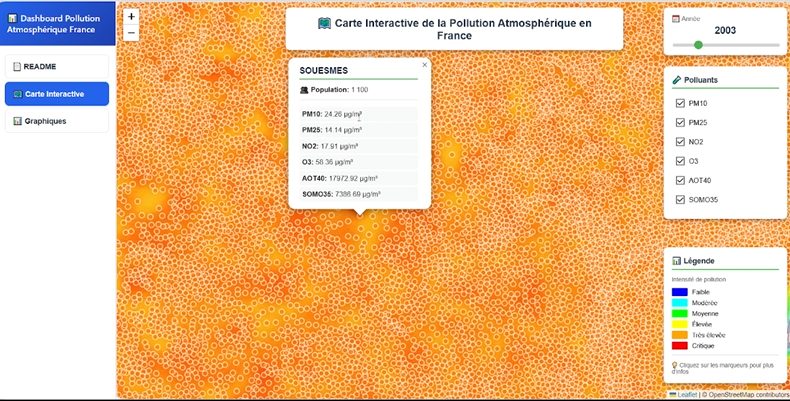
An interactive dashboard reconstructing 15 years of background air pollution across France (2000–2015).
CNN-based face recognition on still images then video, using data augmentation and face alignment.
A terminal text-adventure game in Python, with an object-oriented design.
A culinary data-analytics platform: scraping, ETL and a dashboard over recipe data.
autopkgtest scripts validating scientific software on AMD GPUs, on Debian’s CI infrastructure.
Tools grouped by how they matter to the work above — not a generic list.
Extracting biomarkers, staging, and treatment data from unstructured French oncology text. Where general-purpose NLP breaks and domain adaptation begins.
Designing systems that route to the least opaque tier meeting performance thresholds. Compliance with the EU AI Act as a design constraint, not an afterthought.
Long-term direction: unifying clinical text, imaging, and genomics into models that reason across modalities. The world-models direction applied to medicine.
Teaching mathematics and physics-chemistry to about ten students at Complétude, from primary school through terminale. Making dense concepts learnable is a research skill, not a side gig.
Longer write-ups on the methods, dead ends, and decisions behind the work above.
A walkthrough of where standard NER pipelines fail on French oncology reports, and what that implies for how DEMNE is structured.
The case for routing entities through rules and a fine-tuned transformer before ever calling an LLM — and what it costs to get wrong.